Sunday, July 8, 2012

Hot Time on the Farm

Swiss chard

What a change in the weather from our last posting- from rain and showers every other day, to hot and dry with no rain in sight. While trying to keep everything watered adds to our list of chores, it's still preferable to having it too wet. During the past few weeks, we have been able to keep to our seeding, planting, and weeding schedule and  finally feel that we are almost keeping up.
Lettuce grown for full-sized heads

The farmer's market has been going like gang busters with mostly decent sunny weather and large crowds turning out to shop. While we regret to disappoint our regular shoppers, by not attending the Wednesday market this year, having the extra day on the farm each week has really made a difference in our sanity and the state of the farm.

July weather has brought on an abundance of vegetables at the market. In addition to our standard salad mixes and sprouts, during the past few weeks we have added other crops including: escarole, frisee, Swiss chard, radicchio, fennel, baby eggplant, and mini-cucumbers.

Our farm has always specialized in some of the more obscure vegetables out there. We enjoy growing crops that are not well known and introducing them to our customers. This often leads to the question at market, "What do I do with this?" We love to cook, but frequently don't use recipes, relying instead on experimentation and some basic cooking guidelines. Nearly every dish we make seems to start by chopping and sauteing an onion...

We realize that this cooking strategy doesn't work for everyone, so here is a simple recipe that utilizes some lesser known ingredients that are available now. This comes from one of our favorite cookbooks, A Year in a Vegetarian Kitchen by Jack Bishop.
Fennel

Spinach and Radicchio Salad with Fennel-Red Onion Dressing

4 ounces baby spinach
1 medium head radicchio, leaves torn in bite-sized pieces
3 tablespoons olive oil
1 small fennel bulb, stalks and fronds discarded, bulb very thinly sliced
1 small red onion, halved and thinly sliced
  Salt
3 tablespoons balsamic vinegar
  Freshly ground black pepper

1. Place the spinach and radicchio in a large bowl.

2. Heat the oil in a medium skillet over medium-high heat until shimmering. Add the fennel, onion, and 1/2 teaspoon salt and cook, stirring occasionally, until the vegetables are softened and browned,
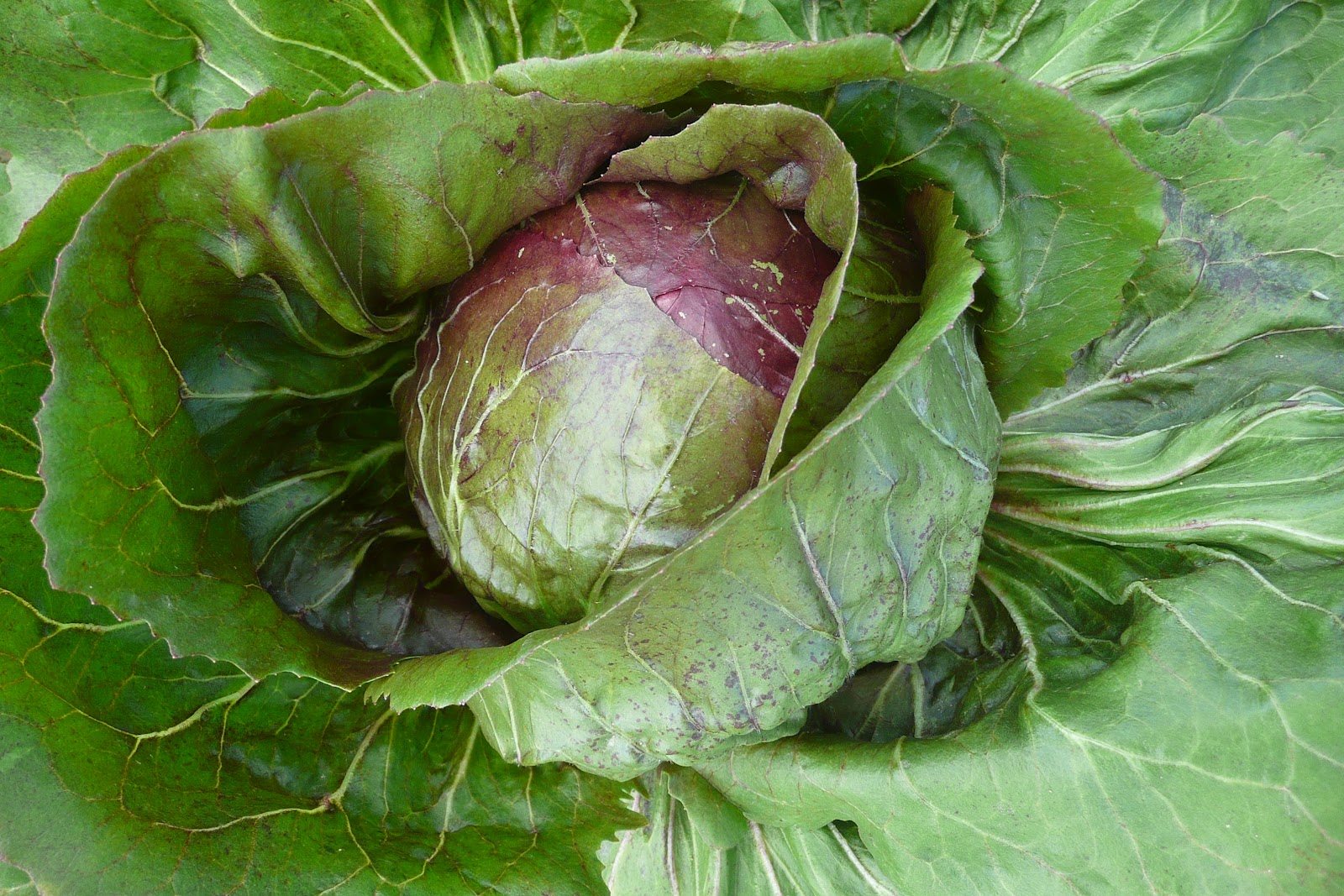
Radicchio
6 to 8 minutes. Stir in the vinegar and cook just until syrupy, about 30 seconds. Remove the pan from the heat and stir in pepper to taste.

3. Scrape the fennel mixture into the bowl with the spinach and radicchio. Toss to combine until the salad greens wilt slightly, about 1 minute. Serve immediately.


As we head into mid-summer, we are anxiously awaiting the harvest of some of our favorite crops. The fingerling potato crop is looking awesome. I can't remember a season when the tops were ever so tall and vigorous. Hopefully, the tubers underneath will be as healthy. Remarkably, we have found hardly any potato beetles on the plants this year. Perhaps the population has been reduced since we have not had potatoes for the past two seasons. Last year they rotted in the ground before sprouting, due to the rain, and in 2010, we did not plant them since we were on sabbatical.


Potato crop


 The heirloom tomato crop is also looking good, but taking their own sweet time in ripening. Their lateness is probably due to a very stressful start at transplanting. They got planted a week or two later than planned, as we waited for the ground to dry out. At planting time the holes were actually filling up with ground water as we dug them...not a good sign. We plopped them in with a splash, and hoped for the best. After a week, many had turned yellow from having saturated roots, but amazingly, after a month they had greened up and were growing nicely. They are now 3 to 4 feet tall and putting on a lot of green fruit. I think the harvest will be late, but plentifully.


Tomatoes in their tunnel

Baby eggplant

A new crop for us this year is baby eggplant. We are trying four varieties that are bred to by harvested small, at just 4 to 6 inches in length and about an inch in diameter. Thin skinned and with essentially no seeds, they are ideal for slicing in a stir-fry or putting on  the grill. So far the plants look vigorous and prolific. They are just starting to produce, so we have not had too many to sell yet - so come early to market if you want to try them.

That's about all the farm news for now. We'll try to keep in touch.

Thursday, May 24, 2012

Gardening Time

Wow, Memorial Day is upon us...does time speed up as you get older? Perhaps this is an example of the TPR principle- that's the Toilet Paper Roll principle: the closer it gets to the end, the faster it runs out. Regardless, the unofficial start of summer is this weekend, of course the astrological start isn't for another few weeks, so don't panic.

Minglewood crew hard at work
Most significantly though, Memorial Day is the traditional weekend to get your vegetable garden planted. The average last frost for this region is May 20, so it should be safe to put out all those warm weather crops like tomatoes, peppers, eggplant, cucumbers, and basil. Of course, with the totally random and unpredictable weather we have had this spring, I would recommend keeping the sheets and blankets handy to cover plants, just in case we get an unusually late frost.

If you are a gardener, be sure to stop by our stand at the Saratoga market to check out all your planting options. We have a wide selection of over 25 tomato varieties, both heirlooms and hybrids, plus peppers, eggplant, herbs, lettuce, cucumbers, zucchini and summer squash. We offer the only Certified Organic plants at the Saratoga market.

On the weather front, farming has continued to be a challenge this year. We have had some absolutely perfect sunny days, however, the rainy periods in between have prevented us from keeping on any kind of regular planting schedule. With our heavy soils, we are forced to wait as long as possible for the fields to dry and then planting like crazy the day before it rains again. With the saturated soils, I am sad to say that crops have not been growing particularly well this spring. The most affected crop has been the field grown spinach. All our early plantings have essentially drowned. They hung on for quite awhile, but finally this week the plants succumbed, turning yellow, struggling for a last gasp of air...and died.

"Help- I'm drowning....."
The spinach goes down


Fields so wet, the geese think it's a pond!


Fortunately we've had the greenhouse plantings for lettuce and mesclun, which have provided a respectable supply for market. We have also had a good run with sprouts at market. It's nice to have at least one crop that is not weather dependant. While we have had issues with airborne mold spores causing trouble during the most humid periods of the summer, generally they are an easy crop to grow.


We produce them in our dedicated sprout room in an automated sprout machine - "Auto-Sprout". This has served us well for 13+ years. The basic process is to soak the seeds first in a very dilute disinfecting solution to kill any bacteria on the outside of the seeds, and then to rinse, rinse, rinse. This process is required by the FDA to insure that the sprouts are safe from pathogens.


Rinsing the seeds


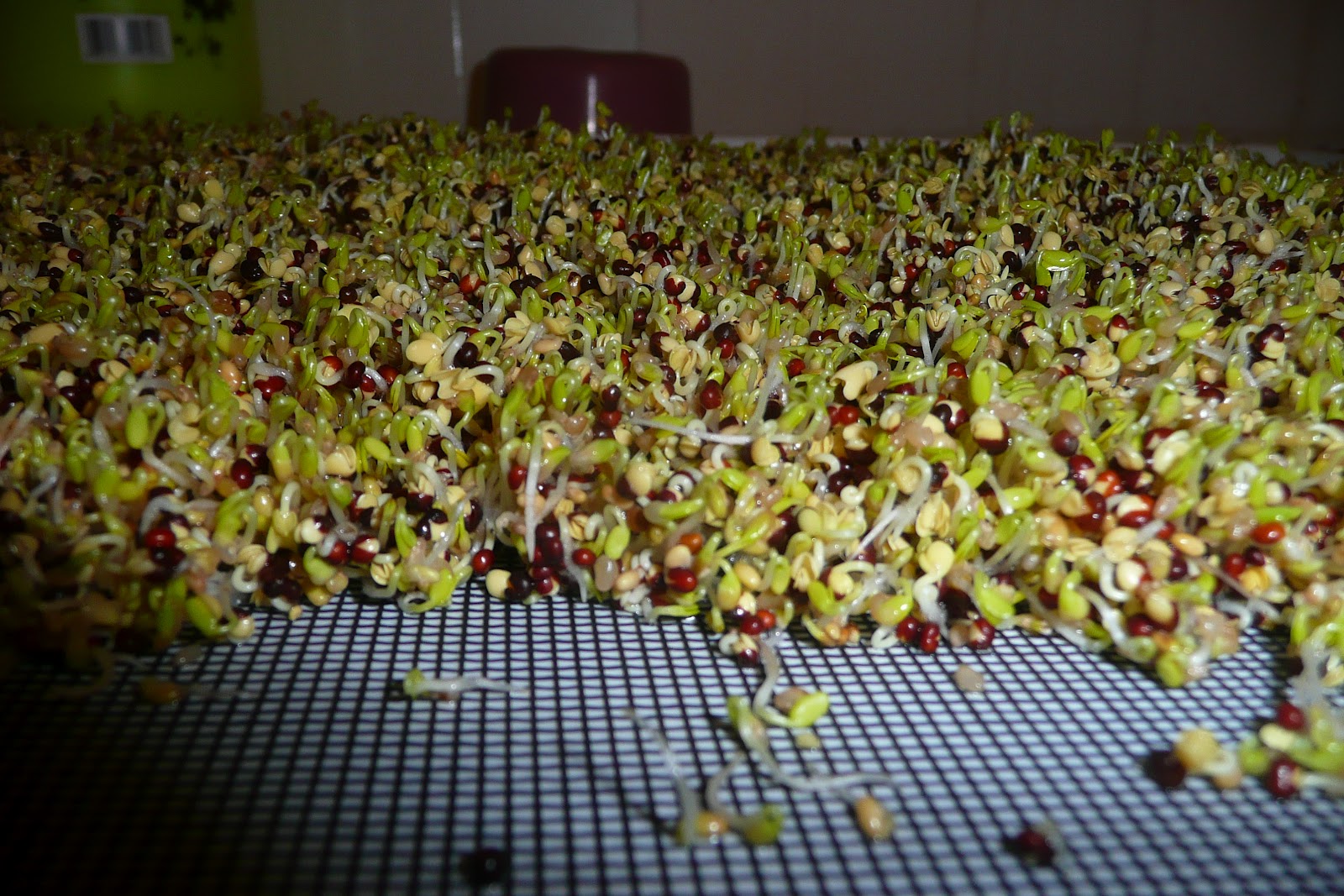
We then soak the seeds in water for 6 to 8 hours, and then spread them on the screen trays. Then we pop them in the sprouter and turn it on. The machine automatically mists the seeds every half hour for 30 seconds. After four days, we start to green them up with a grow light. At five to six days they are ready to eat. We take them out of the sprouter on Saturday morning and bring them to market - voila.

Spreading out the seed on trays

Trays loaded into Auto-Sprout

Sprouts at 1 day old

Sprouts at 3 days old

Sprouts at 5 days old


If only growing spinach was that easy...


Thursday, May 3, 2012

Winter to Spring

Toes toasting in front of fire
Well, here I sit on May first in front of the wood stove... this weather is just not right. I think back so fondly to mid-March when it was so sunny, warm, and dry. Alas, it's too early in the season to start complaining about the weather, so...

Happy May everyone! This blog has had a long hiatus since the last posting, but the advent of spring brings all kinds of bloggable topics. This past winter was eventful, but relaxing too. We had lots of time for all our favorite things: sleeping, reading, eating. We had visits from family and friends including Chris' sister from England, and Tammara's brother from St. Louis and sister from Austin.


Chris and Tammara at Playa El Tunco, El Salvador


We also had time for what has become nearly a winter tradition for us - travels to Central America. This year we went to Guatemala and El Salvador. This completes our check list for visiting all the countries of Central America - not that we were really counting.


Martin cultivating in lettuce tunnel

The farm season got off to a real jump start this year. With virtually no snow melt and little precipitation in late winter, our fields dried out earlier than any other of our 13 previous farm seasons. This allowed us to plow, till, and spread compost over all the fields by the end of March. Early plantings got in the ground on time, and we are off to a great start.

 It was actually so dry that I had to set up the irrigation in April, something I've never had to do before. As luck would have it, after spending a whole day setting everything up, the pump would not work. So for several days I had to revert to watering all the crops with a very long garden hose. Finally, I took the whole pump apart....to find the innards jam packed with hickory nuts! I guess those squirrels were busy last fall filling the intake hose with provisions. We eventually got everything put back together and working- just about the time it started to rain.


Drilling shiitake log

With it too wet to plant, we have kept busy with other projects. We harvested, drilled and inoculated about sixty new shiitake mushroom logs. We do a new batch every spring. It takes a year for the spawn to colonize the log and be ready to produce mushrooms, so what we prepared this year won't be ready until the 2013 season.


Sealing in spawn with melted bees wax


Seedling waiting for transplanting

We've been quite busy in the greenhouses, getting lots of plants started. With the rains delaying the transplanting for two weeks now - the main greenhouse is bursting at the seams. This week we put up our temporary tunnel to start hardening the plants off, as well as, to make room for this weeks seedings.


Salad beds ready to be cut


We are gearing up for our first market of the season this Saturday, May 5. One big change for us this year is that we will not be attending the Wednesday markets. We have debated this issue for a long time. We are constantly trying to find the right balance between time, size and sanity to make the farm a sustainable venture, both financially and personally. Not attending Wednesdays will give us an extra day to do field work on the farm, as well as, giving us more product to sell on Saturdays. We hope this does not inconvenience to many of our dedicated customers and apologize if it does.

We will once again be offering our Minglewood CSA Dollars option at our stand. This allows you to buy shares which are used as credit for any items sold at our stand. Shares range from $100 to $500 and save you from 10 to 20% off the regular prices. Be share to ask us for details at the market.

We are looking forward to a great season. Hope to see you at market.

Thursday, October 20, 2011

Coming Up For Air

Aah... so nice to just breathe again. With the end of our season drawing near, it really does feel like we're finally coming up for air. What a season it has been - certainly one we will remember, but would rather forget. The respite of relatively normal weather in August ended abruptly with hurricane Irene - dumping over 6 inches of rain on us over the course of the storm. As if this wasn't enough, the following week brought an additional 5" - for a total of over 11" in a ten day period. No wonder it feels good to breathe, we've been drowning.Actually, we have little reason to complain, considering all the flood destruction that occurred all around us. Minglewood came through alright, just a little more muddy, rotten, and smelly than normal. The damage to our crops was minor, compared to other farms, but still significant for us. Much of the fall lettuce was lost due to rot, the spinach drowned and died ... again, and most the broccoli was damaged by diseases brought on by too much water.

The other consequence of the storms was that it delayed the planting of the last of the fall crops by a couple of weeks, meaning they did not have much time to grow before the cooler weather set in. Fortunately, fall temperatures have remained fairly mild, so we have bean able to harvest some of these crops for our final markets.

Due to this whole situation, we have not had as much product for market as we would like, especially salad greens. After selling out early on both Wednesday and Saturday markets for a couple of weeks, we decided to consolidate what we had, and just attend the Saturday market for the rest of the season.
Despite all the problems, the produce we do have has been beautiful, perhaps the nicest of the whole year. Growing conditions in the greenhouses for baby salad greens has improved, so we have had some lovely arugula and musclun greens. In the fields we continue to harvest escarole, radicchio, cilantro, broccolini, baby boc choi, and Asian stir-fry greens, as well as, lettuce for our cut mixes. Recent additions on the market table include: baby salad turnips, Tuscan kale, and broccoli rabe.
In the field tunnels we're continuing to harvest heirloom tomatoes and bell peppers. The ripening of the tomatoes has slowed dramatically, as expected, in the past few weeks, but we've still got a respectable sampling of all the varieties. The hornworm activity seemed to abate for a few weeks in September, but came back with a vengeance in early October. Some of the plants have literally been reduced to nothing but stems. Oh well, at least it made finding the tomatoes a whole lot easier. Oh yeah... if you want to meet the hornworms up close and personal, check out this You Tube link: www.youtube.com/user/vanlinc#p/a/u/0/ONvXw4SgvX4
Mushrooms are one crop that actually like all the rain. Many of our logs sprouted spontaneously over the past few weeks, without having to soak and force them to produce. This past week we brought a record16+ pounds to market. It is also the season for our cool weather strain of shiitake, Snow Cap, to produce. This is a beautiful robust mushroom, covered with a downy white fringe.

Things are pretty quite on the farm these days. The crew has been cut back to just Fridays to harvest for Saturday's market. The fields are gradually being put to bed for the winter. Despite all the rain, we did find a couple of dry windows in the weather to seed some nice cover crops of oats, peas , and vetch, which have done wonderfully. So far our frosts have been light, so things are still refreshingly green.
Aah... breathe in... breathe out...

Sunday, August 21, 2011

Summer Crops and the Return to the Mother Ship

August brings the farm into full swing each year, and 2011 is no exception. With so much going on, it doesn't leave much time for blogging, thus the long gap between postings. After the extremes in the weather earlier this season - the cold, wet spring, followed by abnormally warm weeks in the 90's - it comes as a relief to settle into the relatively normal summer weather of the past couple of weeks.August is high season in Saratoga as well, and we have been busy trying to meet the demand of some very busy farmer's markets. So far we have been able to keep up with a steady supply of greens. This is always a challenge in the warmest summer months, since lettuce is essentially a cool weather crop. Our strategy is to just plant a lot of it every week - between 2000-3000 heads a week. Often whole sections of the plantings will end up going to waste because it goes to seed so fast, before we have a chance to harvest it. With weekly plantings, at least, there is usually a block that is the right size and of good quality that we can harvest it for market.
We have also kept up with production of most of our other standard crops: baby boc choi, stir-fry greens, broccolini, escarole, radicchio, frisee, and scallions. In addition, for the summer season we have added cucumbers and green beans to the market offerings. This year we tried a new cucumber variety called Picolino, which is an English cuke bred to be picked small, at 4-5 inches long. We first saw these at some of the farmer's markets we visited in California during our sabbatical last year, and knew we would have to grow them. They make a great convenient snack when picked small - crunchy, sweet, with a thin skin and small seeds. The variety is very prolific and it has been hard to keep up with the picking. Fortunately, the larger cukes taste pretty good too, so we haven't had to waste the ones that get away from us between pickings. The plants are starting to wane, so enjoy them while the supply lasts.
We have not grown beans for a couple of seasons, but we're excited to have them back this year. The variety we grow is called Jade, which is a standard green snap bean, but it stays thinner and grows longer than most other varieties. It too, is quite prolific, requiring long hours of picking in the bean patch. We have several more plantings that have not come into production yet, so we should have beans up until frost.
Of course, the most exciting summer crop are the heirloom tomatoes. These are finally starting to ripen in marketable quantities. This year we are growing eleven varieties, including some of our favorites from past years like: Brandywine, Black Krim, Eva Purple Ball, Earl of Edgecombe, Green Zebra, and Minglewood's own creation, Far Out Willie. We have also added some new ones to try: Marglobe, Big Red, Marvel Striped, Peach Blow Sutton, and the original Red Brandywine.
So far the tomato plants have stayed relatively healthy, with only minor foliar diseases, however, our biggest problem this year has been the devastation caused by the Tomato Horn Worms. These creatures are right out of a sci-fi horror movie. They will grow up to the size of your index finger or larger, and eat voraciously. For whatever reason, their population exploded this year. We joke that perhaps they thought the 'caterpillar tunnels' we grow the tomatoes in was the 'Mother Ship' and they were returning home. Nevertheless, they really did a number on the plants, pruning back the top foliage and chomping on a lot of fruit. Our salable yield has been significantly reduced. With diligent worm eradication, search and destroy missions, we have at least reduced their population to a manageable level to prevent much more damage. Such is the life of a farmer, always something to complain about.
So, stay on the positive side. Take the time to savor the fruits of the season, as time passes so quickly. The signs of the changing season are all around us already: the nights are cooling down, the Battenkill is a bit more bracing, the first leaves on the swamp maples are starting to turn, and the cricket chirps are slowing down.

Tuesday, July 5, 2011

In the Heat of the Summer

School's out, graduates have graduated, the first clutch of robins have fledged, and Fourth of July picnics are just past... it must be summer. The farm is growing and markets have been busy. We finally have a decent supply of lettuce coming out of the field - almost enough to make it all the way through a market without running out. The market table is filling up with an assortment of early summer vegetables: baby boc choi, Asian stir-fry greens, broccolini, escarole, frisee, and fennel.

We even have had a small harvest of early tomatoes. This past winter, my gardening fanatic friend Lyle, suggested we see how early we could get a ripe tomato. Adventurer that I am, I willingly agreed to the plan. In late February, we started plants in the basement, right next to the furnace with grow lights. We selected two varieties to try: Glacier, a super cold tolerant heirloom, and Beaver, another cold tolerant variety from Oregon. By early April they were busting out of their pots. We prepared a bed in the fieldhouse and planted on April 3. First, we laid out red plastic mulch, and then filled up the legendary 'Wall-o-Waters' which surround each plant and add an extra insulating layer.

We were shooting for a ripe tomato by June first, but didn't quite make it. We ate the first ripe, sweet and juicy tomato on June 14- not bad considering all the cool and cloudy weather in May. There are only about 20 plants in the fieldhouse, so production is quite limited, but we have been able to start bringing a few pints to market the past couple of weeks.

The main crop of heirloom tomatoes did not get planted until June 2, so they are quite a way behind the early planting. So far, the plants look healthy and are putting on about 6 to 8 inches of height each week. We are keeping our fingers crossed that the disease gods are kind to us this year and that we will have a joyful and abundant crop. Due to the late start, I would not expect to have tomatoes in quantity until mid-August or later this year.

This past week we started bringing escarole to market. This is one of our favorite cooking greens and a key ingredient to the classic Italian Beans and Greens dish. It's quick and easy to prepare, and so tasty: wash and coarsely chop the escarole, saute some onions and garlic in olive oil, add the escarole and cook until tender - about 1o minutes. Top with cannallini beans and cook until warmed through. Add fresh or dried herbs to taste... and you're done.

In the past we have only grown escarole as a spring and fall crop, as this is when it does best. This year we are also trying some summer plantings - we'll see how it does.

We also started bringing fennel to market this past week. We used to grow this unique crop regularly, but dropped it from our planting plan the past few years because it was not that popular. We brought it back this year, one - because we missed it, and two - there is a small dedicated following of customers who ask for it. The simplest way to use this unusual vegetable is to thinly slice the bulb on a green salad. There are also all kinds of recipes that call for it in rice or pasta dishes. Used fresh, there is a distinctive licorice flavor, but when cooked, the intensity fades, leaving a wonderful sweetness.
Along with this year's successes, we continue to have a number of problem crops. Our gamble on late planted peas was a bust. Germination was very scattered and sparse. The plants that did come up were very short and not very productive. We have been harvesting a few for ourselves this week and we may have a few pints to sell at this week's markets, but that will be all.

Spinach has also been disappointing this year. The earlier plantings were inundated with excessive rain and basically drowned. Spinach is intolerant of having its roots saturated for more than a couple of days. The more recent plantings have not done well either; I guess it's just too hot and the plants bolt (go to seed) before they're barely in the ground. Hopefully, the fall plantings will do better - we'll keep trying.

Finally, we have been having problems with our baby greenhouse greens that we add to the mesclun mix. Again, poor germination and damping off, where a fungus attacks the roots and kills the seedlings, are the problem. There is not much you can do to prevent it, except get as much air flow through the greenhouses as possible, and be careful how and when you water. We also covered the houses with shade cloth to cool them down, and changed our seeding method, which seems to be helping some. Mostly, the diseases just need to run their course and eventually the situation usually improves... we hope.

That's about all the news for now. Enjoy the summer weather while it lasts.

Monday, June 6, 2011

Getting Back on Track


Despite some recent improvements to the weather, the 2011 farm season continues to offer some challenging growing conditions. This past week we finally saw the return of the sun, but it was a long time coming. Here's an interesting statistic for May weather in Greenwich, NY. The average rainfall for the month is 3.75". This year we received 4.84" - about 30% more than average - significant, but not shocking. What I do find shocking, however, is the the fact that there was measurable rain on 20 of the 31 days of May. So, while it did not rain outrageous amounts, it did rain nearly continuously, never giving the ground a chance to dry out. The biggest casualty of all the rain appears to be the potatoes. After waiting and waiting for the leaves to emerge from the ground, today I finally dug around some of the rows. What I found was not good - liquefied goo, where there should be potatoes. I guess being saturated for weeks was too much for them and they rotted, rather than sprouted. Needless to say, we are bummed.

We are still trying to get in sync this season. After getting so far behind schedule, it's difficult to figure out what to do first when we finally get a break. Everything needs to be done at once - all the planting, the seeding, the weeding, as well as, all the regular jobs like watering the greenhouses, growing the sprouts, soaking mushroom logs, harvesting crops and going to market.

This past week we decided to focus on getting the tomatoes and peppers planted. For any chance of having a crop, these really needed to get in the ground sooner rather than later. Before planting we first put up the growing tunnels. This is always a major production, involving laying out landscape fabric, pounding stakes, putting up hoops, and covering with plastic. It's a lot of extra work, but the benefits of growing in a protected environment is worth the effort.

We also managed to get in a couple more lettuce plantings during the past two weeks. One improvement to the farm this year is the addition of a waterwheel transplanter. This is a common piece of equipment on vegetable farms that we have contemplated buying for years. Our farm is an in between size - really not big enough to justify the cost of a lot of mechanized equipment, but large enough to make doing everything by hand a real challenge.


We decided the transplanter was worth the cost. It probably won't be much faster than planting by hand, but it is much easier on the back and knees. Basically, it takes three people to operate, one drives the tractor and two sit in the back to punch in the plants. A spiked planting wheel for each row in the bed makes a hole and then waters the plant. It is a little had to get used to and we have not hooked up the water part yet, but I think eventually it will run smooth and efficient.

With any luck, we will get back on track in the next few weeks. We'll keep you posted.